BULATSA validates successfully a new SESAR technology

Home / Archive by category 'Projects'

BULATSA validates successfully a new SESAR technology

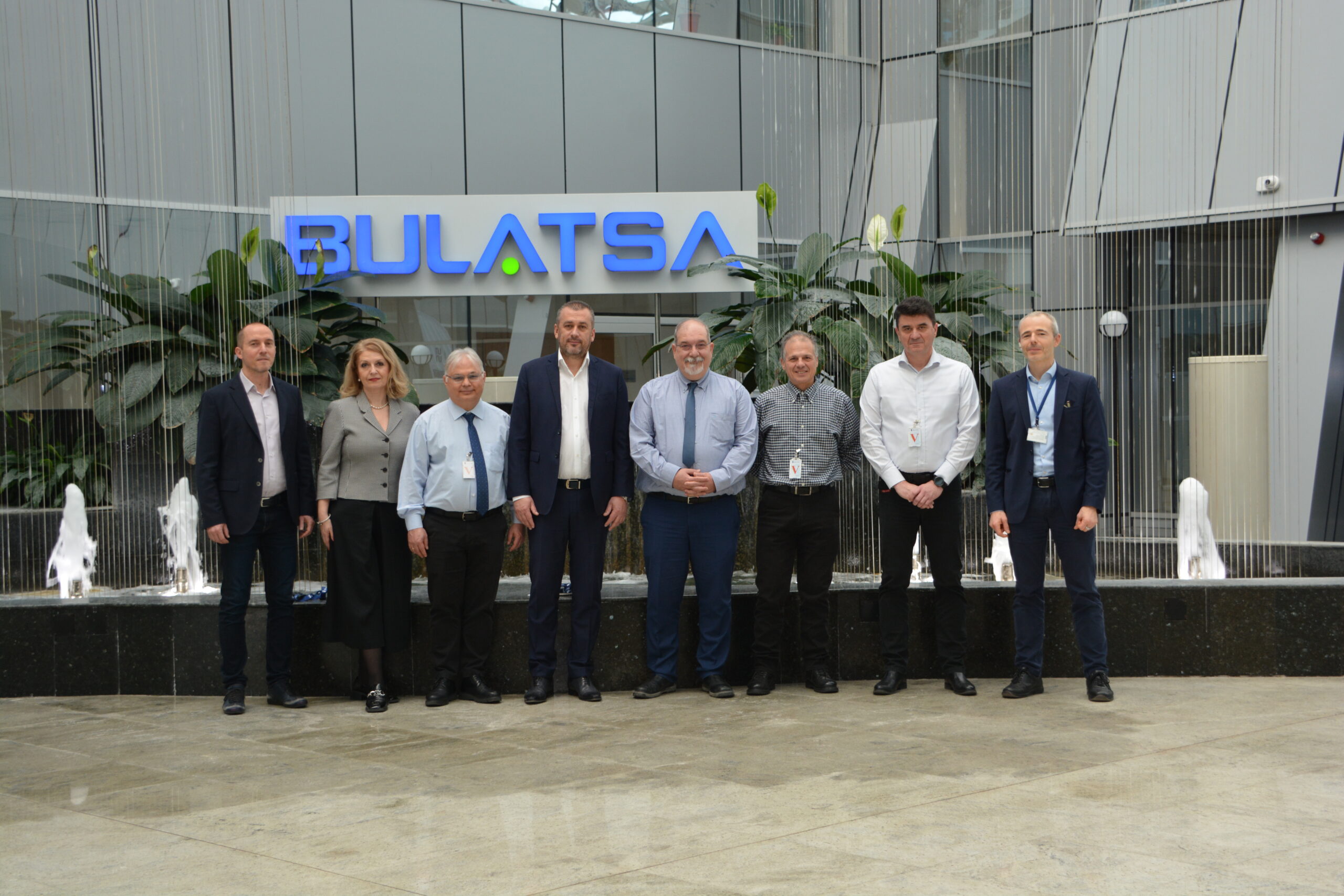
BULATSA together with its partners ROMATSA, Leonardo and EUROCONTROL Network Manager successfully completed the first validation within the NETWORK TBO project of the European Union SESAR 3 research and innovation program in the field of air traffic management. Co-funded by Horizon Europe and managed by the SESAR 3 Joint Undertaking, the validation exercise is a key step towards the final validation planned for 2025.

Within the framework of the validation, BULATSA and ROMATSA confirmed the smooth exchange of electronic OLDI messages with the Network Manager through LEONARDO’s technology for transmitting OLDI messages through the SWIM Yellow Profile. The new technology allows synchronization of aircraft trajectory information at the local and network level, which aids in 4D trajectory prediction, improves coordination in European airspace and ensures more efficient and safer operations in the future.

Czech Republic joins SEE FRA

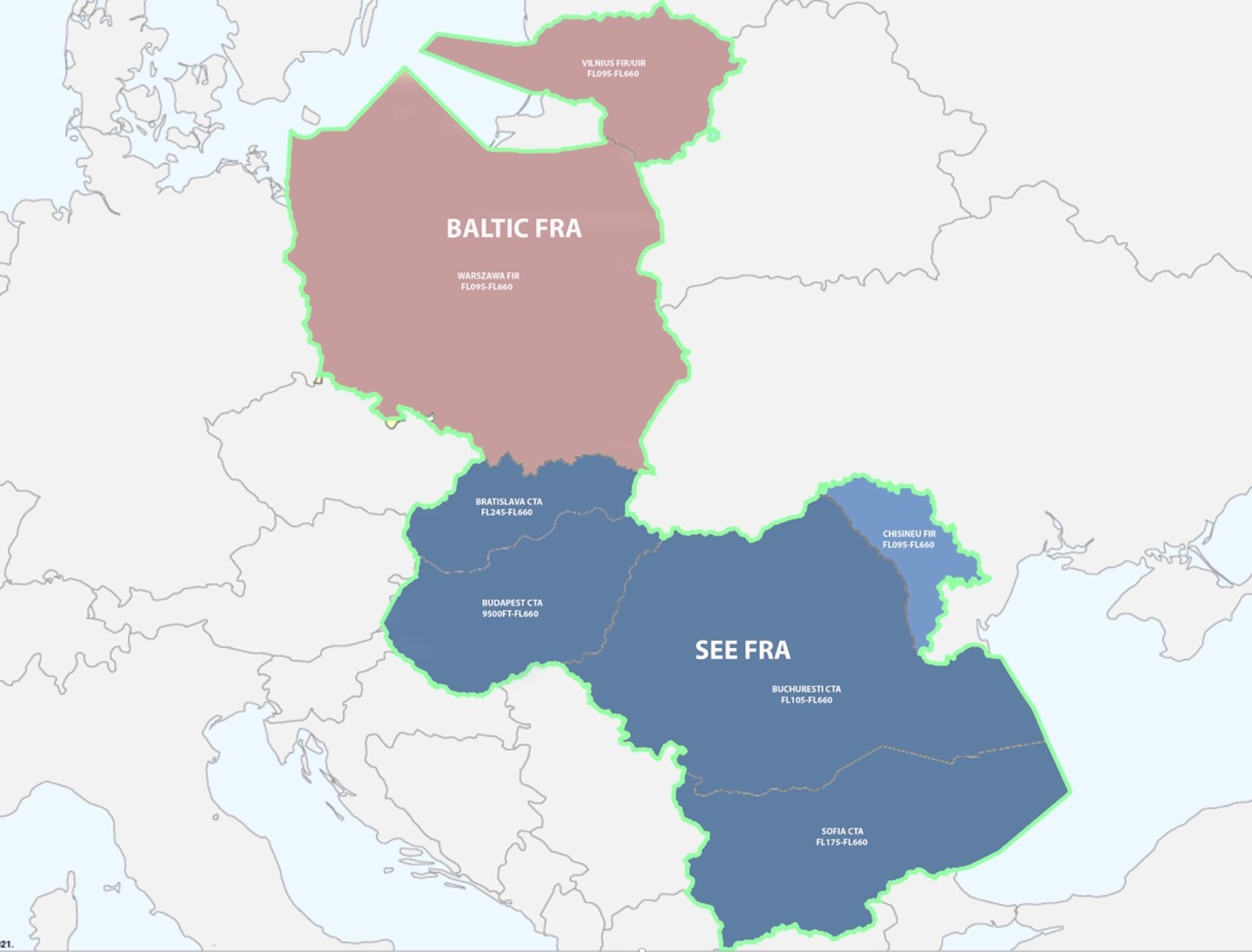
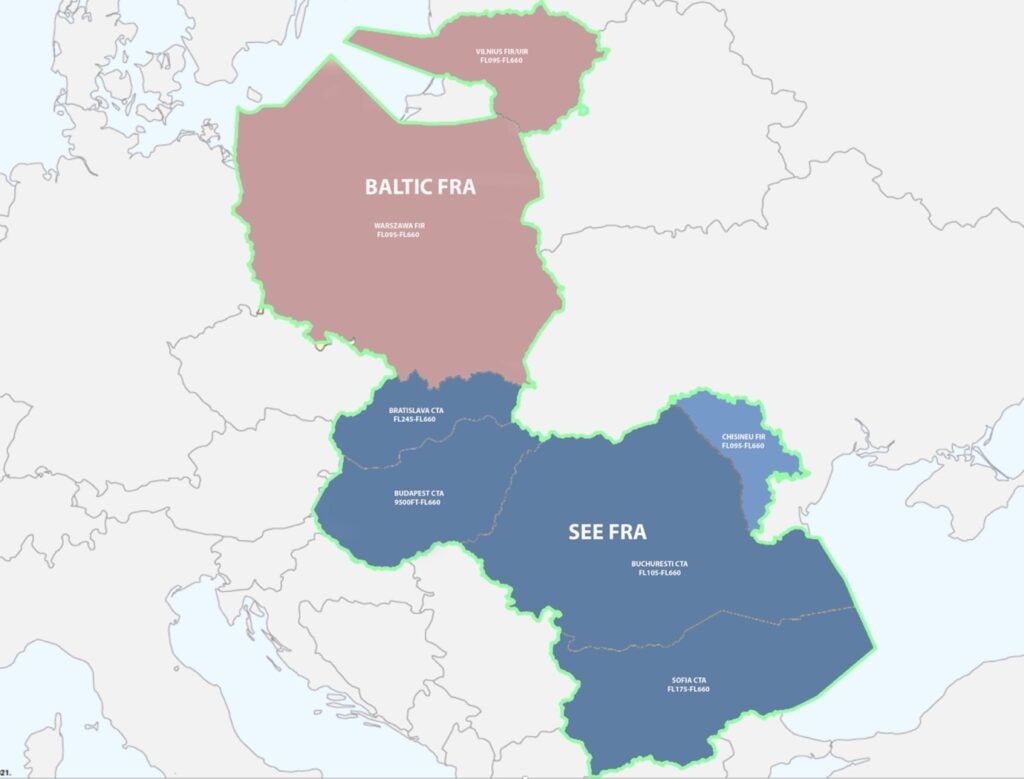
Starting from 23rd of February 2023 the Aircraft Operators are able to plan their flights freely across the airspace of Bulgaria, Hungary, Romania, Slovakia, Republic of Moldova and Czech Republic 24/7 without the limitations of the geographical boundaries. The inclusion of the airspace of the Czech Republic represents the third expansion of the SEE FRA project (South East Europe Free Route Airspace, successfully implemented on the 7th of November 2019), thus making possible cross border free route operations across the airspace of the 6 states. Therefore, SEE FRA becomes one of the largest free route airspace blocks in Europe.

In addition to the SEE FRA expansion, the implementation of cross border operations between SEE FRA and BALTIC FRA opens the airspace from the Black Sea to the Baltic Sea for free route operations.

The new flight planning rules significantly optimize the flight trajectories not only by using the shortest connections but also allowing the use of the most effective routings when the impacts on the flights are inevitable e.g adverse weather avoidance.

According to the simulations, SEE FRA contributes to a significant reduction of emissions and of millions of miles (NM) daily, from the total mileage.


It should be acknowledged that the Network Manager has a central role as an enabler and driver of the airspace improvements at European level. Thanks to the active involvement and full support of EUROCONTROL Member States and EUROCONTROL Agency, the Aircraft Operators will be able to fly on optimised profiles, using less fuel, hence reducing aviation´s environmental footprint.

BULATSA and Leonardo Held a Demonstration Under SESAR 2020 Programme

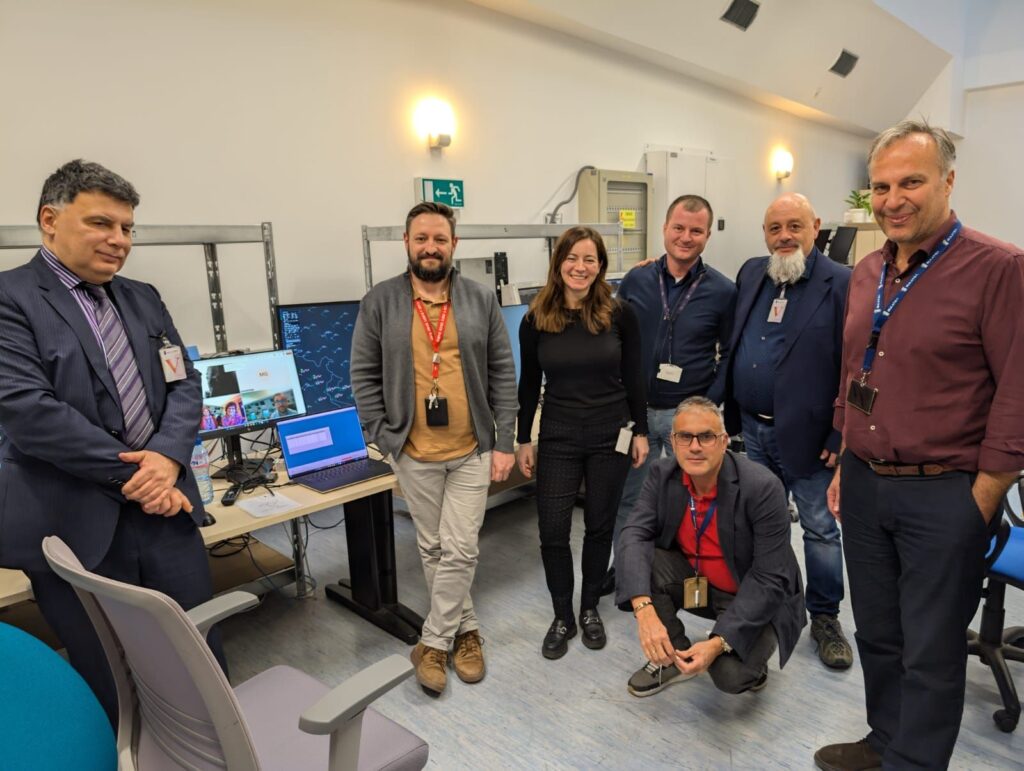
BULATSA hosted an Open Day to demonstrate to a wide audience the capabilities of the system to prevent conflicts in the airport zones and increase the efficiency of related operations – PJ.02 AART (Airport Airside and Runway Throughput).

The project was launched in 2019 as part of SESAR 2020, Wave 2 programme. In October 2022, the final validation session for the project was held at the Leonardo headquarters in Rome, in which participated air traffic controllers from BULATSA.

Within the project, experts from Leonardo and BULATSA worked to upgrade the solutions in the field of automation, Airport Collaborative Decision-Making (A-CDM) and data transfer (datalink). The aim was to provide solutions to improve the departure and arrival operations at airports with limited capacity, as well as the access to alternate airports in low visibility conditions.

On the open day BULATSA and Leonardo presented the achievements of the project and discussed the results of the conducted validations. Representatives of DG CAA, the air navigation service providers of Italy and the aeronautical industry, including SESAR 3 Joint Undertaking, SWAN Crew and Indra, got acquainted with the proposals to optimize the tactical conflict management in the movement phase on the apron and taxiways and the improved routes for taxiing the aircraft along the runway. In addition, solutions to prevent runway excursions by synchronizing the exchange of air-to-ground information on the runway surface conditions were discussed.

PJ.02 AART project solutions contribute to increased efficiency and situational awareness for both air traffic controllers and airport vehicle drivers, with a positive effect on safety and time management.

***

SESAR 2020 is a European Union programme that focuses on the development and validation of technological solutions in the field of air traffic management. It is funded by the Horizon 2020 research and innovation programme.

Nineteenth meeting of the DANUBE FAB SCF

The 19th meeting of the SCF was held on 25thJanuary 2023 in a face-to-face format, for the first time since the outbreak of the Covid-19 pandemic. The meeting allowed the social partners to receive a summary of the activities completed in 2022, as well as to gain knowledge about the planned activities within the DANUBE FAB for 2023.

The nineteenth meeting of the DANUBE FAB SCF updated participants on the DANUBE FAB strategic documents and on projects that have recently been completed and significantly progressed within the FAB. Most notable was the continued expansion of South East Europe Free Route Airspace (SEE FRA). In February 2022, the airspace of the Republic of Moldova has been integrated in SEE FRA, while in February 2023 SEE FRA will expand even further with the inclusion of FRACZECH (Czech Republic).

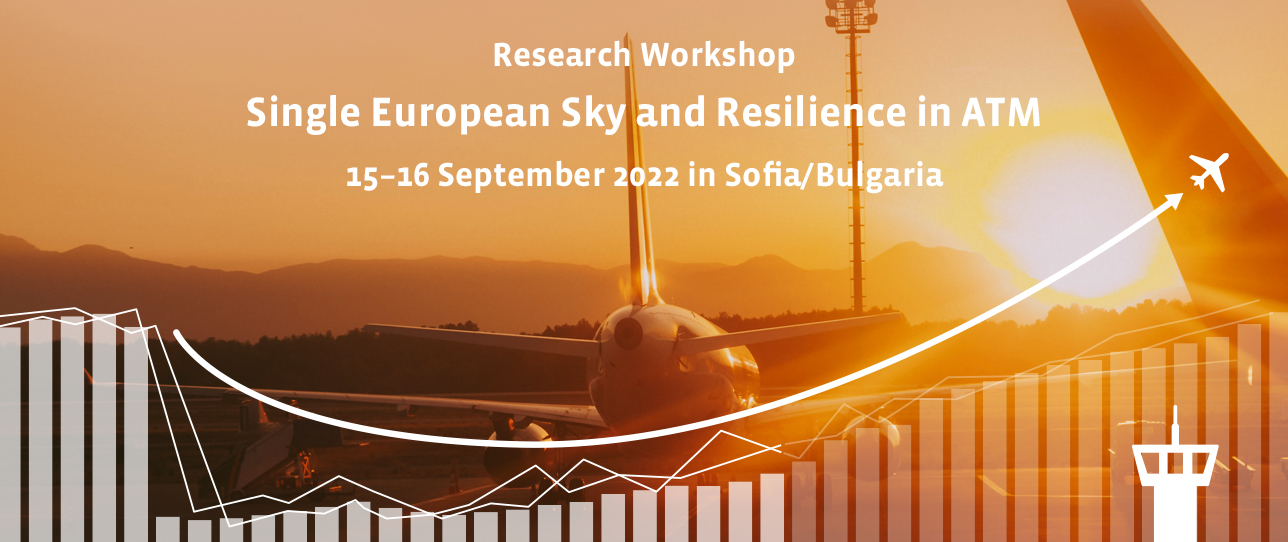
Regarding the InterFAB domain, DANUBE FAB continued to play an important role by strengthening the cooperation arrangements with other FABs and aviation stakeholders. As such, a research workshop on “Single European Sky and Resilience in ATM “ was organised by DANUBE FAB and FABEC on 15th-16th September 2022 in Sofia, also with the social partners’ participation. The conference was held in partnership with the German Aviation Research society (G.A.R.S.) and brought together academics and practitioners to provide a forum for mutual exchange and an opportunity to share ideas for resilient ATS.

Other activities explained during this forum included the recent EU developments, with specific updates and discussions regarding the accession of ROMATSA and BULATSA to the SESAR 3 Joint Undertaking, their joint participation in the Digital European Sky Industrial Research Call for proposals, the new SESAR Deployment Manager Partnership and possible ways to find common grounds for a future collaboration.

The next DANUBE FAB Social Consultation Forum shall be held in autumn 2023.


Note for editors:

DANUBE FAB is the functional airspace block formed between the Republic of Bulgaria and Romania, including the Bulgarian Air Traffic Services Authority (BULATSA) and the Romanian Air Traffic Services Administration (ROMATSA), as the air navigation service providers. DANUBE FAB is a key element of the Single European Sky (SES) legislative framework, which prescribes a range of measures to ensure sufficient capacity for servicing flights over Europe.

Turbulent times – academics and experts seek solutions for more resilient air traffic management

16 September 2022; Around 100 participants from all over Europe and America attended the research workshop Single European Sky and Resilience in ATM in Sofia, Bulgaria, on 15-16 September. Organised by Danube FAB, Functional Airspace Block Europe Central (FABEC) and the German Aviation Research Society (GARS), the workshop brought together senior academics, high-level industry experts and regulators to exchange views on how to manage increasing uncertainty in air traffic management. In response to shocks such as tumbling demand during the pandemic, geopolitical upheaval, unpredictable weather phenomena and changing traffic patterns, delegates identified priority areas to increase resilience during challenging times.

Unpredictable events have become everyday reality and take different forms and range from local loss of traffic or local extreme weather to global shocks such as the pandemic and the war in Ukraine. Rather than dwell on their frequency and cause, the workshop highlighted the importance of preparing for future uncertainties and shocks. For example, shifting traffic flow leads to excess demand and additional income in some states while others experience unused capacity and falling income. Just-in-time resource management is unsuited to these extreme fluctuations, and capacity planning take on greater importance. Disruptive events take different forms and range from local loss of traffic or local extreme weather to global shocks such as the pandemic and the war in Ukraine. There is a balance to be found between operational and financial resilience to withstand such events. Societal concern over climate change and environmental changes have a slow but long-lasting impact, but it is so far attributed minor importance in the regulation defining the mandate of air navigation services.

Among senior speakers, delegates heard from Princeton University Professor of Economics and Director of the Bendheim Center for Finance, Markus Brunnermeier, about managing uncertainty, and from Embry-Riddle Aeronautical University’s Radu Babiceanu about cyber security resilience. Industry representatives and academics from more than ten European countries and the United States contributed to in-depth discussions about the challenges and opportunities facing air traffic control and the value of resilient infrastructure. This resulted in key findings that highlight the importance of balanced performance targets, financial and operational buffers, regular stress tests and a collective approach to forecasting to best help manage future uncertainty.

The airspace of the six FABEC States of Belgium, France, Germany, Luxembourg, the Netherlands and Switzerland is one of the busiest and most complex in the world. The majority of major European airports, major civil airways and military training areas are located in this area. FABEC airspace covers 1.7 million km2 and handles over 55% of European air traffic. In 2020, FABEC won the ATM Environment Award for the second consecutive year.

Republic of Moldova joins SEE FRA

Starting from 24th of February 2022 the Aircraft Operators are able to plan their flights freely across the airspace of Bulgaria, Hungary, Romania, Slovakia and Republic of Moldova 24/7 without the limitations of the geographical boundaries. The inclusion of the airspace of the Republic of Moldova represents the second expansion of the SEE FRA project (South East Europe Free Route Airspace, successfully implemented on the 7th of November 2019), thus making possible cross border free route operations across the airspace of the 5 states. Therefore, SEE FRA becomes one of the largest free route airspace blocks in Europe.

In addition to the SEEFRA expansion cross border operations between SEEFRA and BALTIC FRA are also implemented which makes airspace spanning from the Black Sea to the Baltic Sea open for free route operations.

The new flight planning rules significantly optimize the flight trajectories not only by using the shortest connections but also allowing the use of the most effective routings when the impacts on the flights are inevitable e.g adverse weather avoidance.

According to the simulations, SEE FRA contributes to a significant reduction of emissions and of millions of miles (NM) daily, from the total mileage.


It should be acknowledged that the Network Manager has a central role as an enabler and driver of the airspace improvements at European level. Thanks to the active involvement and full support of EUROCONTROL Member States and EUROCONTROL Agency, the Aircraft Operators will be able to fly on optimised profiles, using less fuel, hence reducing aviation´s environmental footprint.

Successful Gate One CEO meeting in Sofia takes collaboration among the region’s leading ANSPs to the next level.

Photo: BULATSA

CEOs and representatives of 13 ANSPs from Central and Eastern Europe, members of the Gate One Coordination Platform, met in Sofia, Bulgaria to discuss their strategic objectives and working programme in the context of the changing environment of the Single European Sky. During the meeting CEOs agreed on the importance of strengthening the strategic position of Gate One at European level and its cooperation techniques, bringing operational benefits towards the fulfilment of SES and emphasising its pivotal role as a key player in the decision-making processes in European ATM.
Chair of Gate One and CEO of HungaroControl, Kornél Szepessy stated: “This regional ANSP cooperation platform is the foundation of our common success. As we are getting ready for future challenges, collaboration has never been more important when working out emerging concepts in ATM or creating the ANSP business model of the next decade. The Gate One Work Programme for 2020 will enable us to tackle the capacity crisis and strengthen our strategic positions in coordination with CANSO Europe.”
The meeting in Sofia made for a fruitful discussion on Gate One’s action plan for 2020, stressing on the pertinence of voicing common positions on prevailing topics such as emerging concepts in ATM, new business models for Air Traffic Data Service Providers, the future economic regulation on the ANSPs and the future of the Single European Sky.

BULATSA PARTICIPATED IN A VISITORS’ DAY ON GRADE PROJECT

Photo: BULATSA

BULATSA participated in a Visitors’ Day for flight tests on GRADE Project, which took place in the Italian Aerospace Research Center CIRA, in Capua, Italy.
The president of CIRA Mr. Paolo Anunciato opened the event and welcomed the participants, and the project manager Mr. Antonio Vitale presented the results achieved so far and the next activities.
The purpose of the simulations was to demonstrate the applicability of SESAR solutions #51, #55 and #103 for the general aviation light aircraft conducting flights under Visual Flight Rules (VFR). The tests included real-time joint flights of a small P92 Echo Super airplane, used by CIRA as a so-called “Flying Laboratory” for Aeronautical Research (FLARE), and the tests were conducted as planned.
The “Flying Laboratory” was equipped with a tablet type mobile device, which demonstrated the possibility for safe conduction of this type of flights, whereby the used program was specifically designed by the NAIS company.
GRADE is a pan-European project designed to demonstrate the ability of the general aviation light aircraft, conducting flights under Visual Flight Rules, to use the SESAR concepts to integrate into the airspace and into the airports designated for commercial aviation.
BULATSA participates in the project together with the Italian Aerospace Research Center and coordinator of the project – CIRA, the German Center for Air Navigation and Space Research – DLR (Deutsches Zentrum für Luft- und Raumfahrt e.V.), the ANSP of Malta – MATS (Malta Air Traffic Services), the Italian technology company NAIS (Nextant Applications & Innovative Solution S.r.l.), the Technical University in Braunschweig – TUBS (Technische Universitaet Braunschweig) and the Parthenope University in Naples UPTH (Università degli Studi di Napoli Parthenope).
More information about GRADE project you can find here: www.gradeproject.eu and here: https://www.bulatsa.com/deynosti/proekti/mezhdunarodni-proekti/grade-gnss-solutions-increased-ga-and-rotorcraft-airport.

Gate One Meeting in Hungary

Photo: BULATSA

The Chief Executive Officers of Air Navigation Service Providers (ANSP), members of the Coordination Platform for Regional Cooperation in Central and Eastern Europe – Gate One, held a meeting in Hungary, hosted by HungaroControl.

At the meeting were discussed the future work of the platform and the need to formulate Gate One strategic ideas and goals in relation to the development of the Single European Sky.

“The future of the Single European Sky requires a proactive attitude and development of concrete proposals” – said Georgi Peev, Director General of BULATSA.

BULATSA participated in a Visitors’ Day for GRADE Project flight tests

photo by DLR

BULATSA participated in a Visitors’ Day for GRADE Project flight tests, which took place in the Headquarters of the German Aerospace Center (DLR), in Brunswick, Germany.
The purpose of the simulations was to prove the applicability of SESAR solutions #51, #55, #103 and #113 for General Aviation and Rotorcraft. The tests included joint flights of a small Cessna airplane and an EC135 helicopter on different routes with approaching trajectories below the safe minimum.
The aircraft were equipped with specially developed technologies by DLR and the Technical University of Brunswick (TUBS) to enable the safe conduct of such flights. Both types of interfaces were shown as well as records of tests already performed.
According to the GRADE project plan, another series of flight tests will be held in October 2019 at the Italian Aerospace Research Center (CIRA) in Capua, Italy.
GRADE is a pan-European project that aims to demonstrate the ability of General Aviation and Rotorcraft to use SESAR concepts to integrate into airspace and airports.
BULATSA participates in the project together with the Italian Aerospace Research Center CIRA – project coordinator, the German Center for Aeronautical and Space Research DLR (German Aerospace Center), the ANSP of Malta – MATS (Malta Air Traffic Services), the Italian technology company NAIS (Nextant Applications & Innovative Solution Srl), the Technical University of Brunswick – TUBS and UPTH University (Parthenope University of Naples) in Naples.
More information about GRADE project you can find here: www.gradeproject.eu and https://www.bulatsa.com/deynosti/proekti/mezhdunarodni-proekti-2/sesar-2020-2/grade-gnss-solutions-for-increased-ga-and-rotorcraft-airport-accessibility-demonstration/