

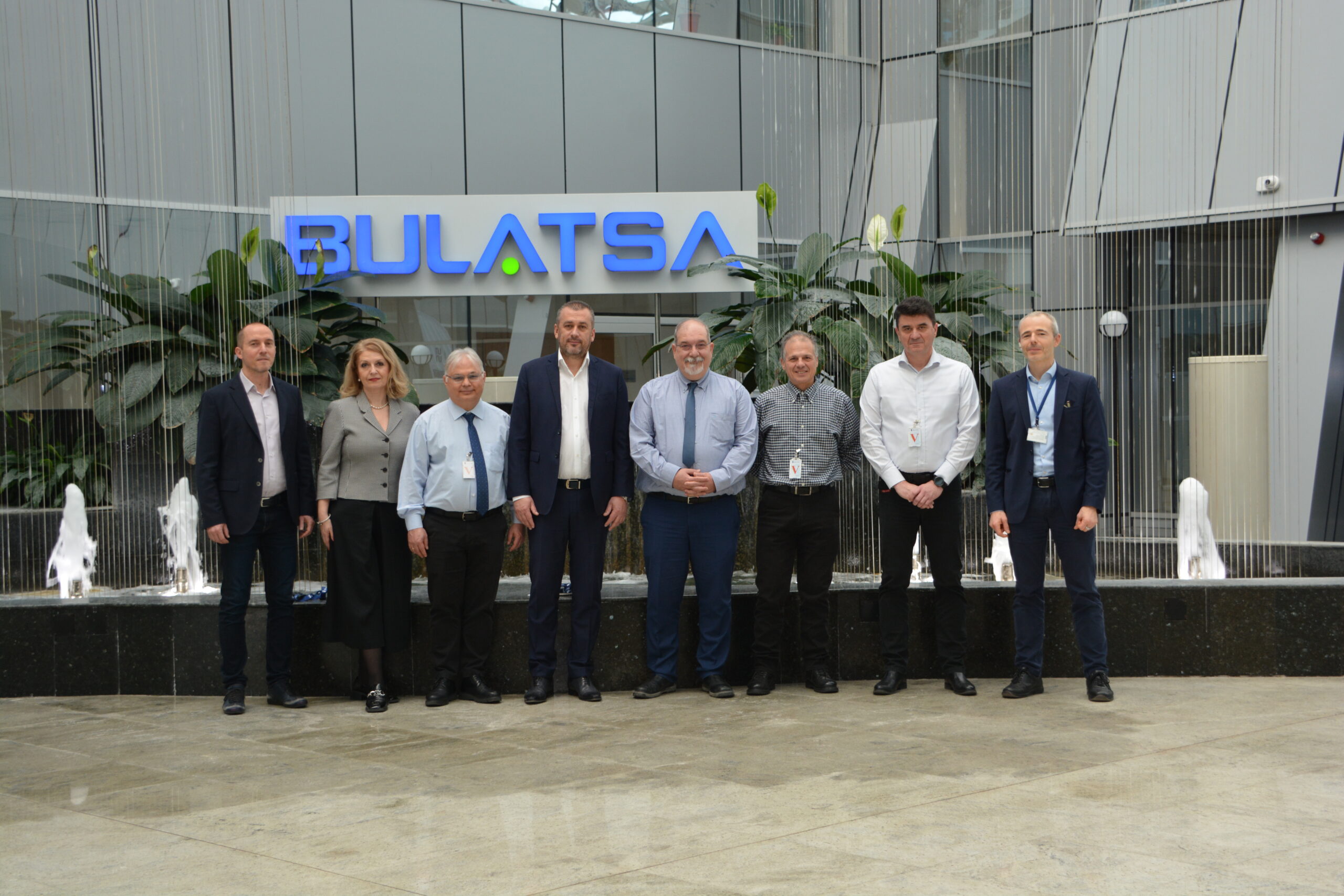

The Gate One annual CEO Meeting took place on the 22 February 2021. At their virtual event, Gate One CEOs exchanged views with Mr Iacopo Prissinotti, Director NM of EUROCONTROL, on the most important recent developments in the ATM sector, including the impact of CoViD-19, the environmental challenges the aviation sector is facing, SES 2+, network performance and the Deloitte review of EUROCONTROL activities
Category: News
BULATSA has signed a contract with the European Space Agency for its participation in the Iris project


BULATSA has signed a contract with the European Space Agency (ESA) under the “BULATSA contribution to Iris validation” project. It is part of ESA’s Fifth Tender Procedure for Bulgaria under the Cooperating States Plan and describes the participation of BULATSA in Phase 2 of the large-scale Iris project.
Iris is a project funded by the European Space Agency (ESA) and launched in 2007 through a public-private partnership with Inmarsat, a leader in satellite technology. The project aims to develop an air-to-ground satellite communication system for the needs of ATM. The development and implementation of a satellite-based DLS service (data-link services) is necessary due to the limited capacity of the current service – VDL Mode 2.
Currently, Iris has completed Phase 1 of the examination, with the participation of representatives of the European industry (the German Aerospace Research Center (DLR), Thales Alenia Space, Airbus, etc.), as well as European air navigation service providers (ANSPs).
In support of the modernization of ATM systems and given the limitations of the current VDL Mode 2 service, BULATSA monitors the developments in the industry. After series of meetings with Inmarsat and exploring the opportunities provided by ESA’s Cooperating States Plan, BULATSA decided to participate in Phase 2 of Iris.
Phase 2 of the project was officially initiated in March 2020 and includes testing of the service in European airspace. European ANSPs and specially equipped aircrafts will validate the developed functionalities in a real operational environment. In this phase, Inmarsat and ESA should prepare the service for pan-European certification. The goal is for Iris to enter by 2028 as the main means of communication between air traffic controllers and pilots via satellite-based data link.
BULATSA’s participation in the project covers the preparation and conduct of validations, demonstrations and concomitant documentation with operational and technical focus in cooperation with Inmarsat, Eurocontrol, European ANSPs – DFS, DSNA, ENAIRE, LFV, LVNL, Nav Portugal, Romatsa, skyguide, representatives of the industry, etc.
The “BULATSA contribution to Iris validation” project was approved by ESA within the Fifth tender procedure for Bulgaria under the Cooperating States Plan, which was opened at the end of 2019. The project with ESA is planned to be implemented in the period from February 2021 to November 2023, with financing from the fund for cooperating states of ESA E/0908-10 – PECS Bulgaria, according to the Contract between BULATSA and ESA No. 4000133824/21/NL/SC.
Additional information about Iris can be found at https://www.esa.int/Applications/Telecommunications_Integrated_Applications/Iris_for_aviation
Disclaimer: The view expressed in this publication can in no way be taken to reflect the official opinion of the European Space Agency.
BULATSA TEMPORARILY SUSPENDS THE FEAST II TEST


In connection with the introduction of strict anti-epidemic measures in the country, BULATSA temporarily suspends the planned activities for conducting the FEAST Part II test, for candidates participating in the autumn selection for air traffic controllers for 2020.
The candidates admitted to the FEAST Part II test will be further notified of the test dates. The expected start for the continuation of the selection is in the first week of January 2021.
DANUBE FAB continues its work in 2020

BULATSA and ROMATSA, long-standing partners in DANUBE FAB, continue to work on the effective management of the ongoing DANUBE FAB activities in the context of the Covid-19 pandemic, which has a negative global impact on the aviation sector.
The regular sessions of the DANUBE FAB governing bodies (ANSP Board and Governing Council) were held by videoconference on 28th and 29th October, 2020. During the meetings the parties committed themselves to using the current crisis for revision of the strategic activities of DANUBE FAB in order to better synchronize them with the current situation and the latest EU legislative proposals in the field of ANS. The participants were informed about the free route airspace developments in DANUBE FAB and the plans in 2021 for Slovakia to join the Republic of Bulgaria, Romania and Hungary in SEE FRA. As a result of the activities of the Inter-FAB Coordination platform in Europe, Baltic FAB, DANUBE FAB, FAB CE and FABEC have signed a joint declaration on cooperation in the field of air navigation information management (AIM) to achieve the objectives of the SES.
On November 19, 2020, a regular online meeting of the DANUBE FAB Social Consultation Forum (SCF) was also held. The meeting was attended by representatives of the management of BULATSA and ROMATSA, as well as the social partners in both enterprises. The achievements of DANUBE FAB in 2020 were discussed, as well as the challenges in the context of the long-term and short-term impact of the pandemic on aviation.
BULATSA and ROMATSA continue to closely monitor the developments internationally and present coordinated positions on behalf of DANUBE FAB through the various international channels and cooperation mechanisms.
For more information: www.danubefab.eu.
TEA English language exams are suspended

In connection with the complicated epidemiological situation in the country, as of November 16, 2020, BULATSA suspends the holding of English language proficiency examinations (TEA) for non-BULATSA employees.
BULATSA Academy has renewed admission for new air traffic controllers

BULATSA Academy renews the exams for new air traffic controllers. Those wishing to submit documents for the autumn selection can do so until 17.00 o’clock on October 30.
Due to the situation with COVID 19, the management of BULATSA cancelled the spring session, but the reception and processing of documents has not stopped. The economic crisis caused by the pandemic had a serious impact on the transport sector, forcing BULATSA to reconsider its plans for the future, but still BULATSA decided to continue the selection of air traffic controllers, albeit with a slight reduction in the numbers required. The aim is to continue the practice of conducting two selections per year, in the spring and autumn.
BULATSA Academy is part of the Bulgarian Air Traffic Services Authority and is the only certified in Bulgaria organization for training of air traffic controllers, according to the requirements of the European Union and the applicable national legislation. The training of the approved candidates lasts about a year and a half, during which time a scholarship is provided for them. Upon successful completion of the course, the future air traffic controllers receive certificates of competency that meet the established international standards and can begin to practice the profession.
Those wishing to work as air traffic controllers must be under the age of 31, with a university degree, a minimum bachelor’s degree (regardless of major) and a good command of English – level B2. Anyone who does not have a valid level certificate will be able to take a free test at the BULATSA centres in Sofia, Varna and Burgas. In the selection of candidates for air traffic controllers, BULATSA uses FEAST and WOMBAT tests. If failing the FEAST and WOMBAT psychomotor tests, the candidate will be re-admitted to a next selection of air traffic controllers, after not less than 24 months from the date of the previous appearance, whereby not more than two appearances on each of the tests is allowed.
More information about the individual stages of the exams can be found HERE.
BULATSA ASSIST principle: How to effectively sustain safe operations


BULATSA ASSIST principle: How to effectively sustain safe operations
Georgi Peev, BULATSA Director General, gives an insight as to how his ANSP has been coping with the challenges of COVID-19
As someone who worked as an air traffic controller, I had been extensively trained to act quickly and decisively in abnormal situations. At such times the well-known ASSIST principles kicked in – Acknowledge, Separate, Silence, Inform, Support, Time – a mnemonic to help air traffic controllers and the pilots handle the unknown. Of course, this is not a silver bullet and the hours spent training for it cannot guarantee a perfect outcome every time. The other crucial factor in times of distress is that you had a strong team beside you and everyone acts as one.
If I draw a parallel between the ASSIST logic and the way BULATSA handled the current challenging situation, I can describe our actions as follows.
Acknowledge: We recognised the potentially hazardous situation in its very early stages. BULATSA started preparing for a serious scenario in mid-February, much earlier than the national emergency was announced on 13 March. Our first goal was to ensure that this new situation was well-understood and acknowledged by all of us. A special management team was assigned to deal with the coming challenges. We were monitoring and analysing the available data and news on a daily basis to elaborate our immediate responses based on different escalating scenarios, including a variety of traffic predictions.
Separate: We needed to act fast to protect the most important company asset – our people. We established and maintained separation between the different types of employees – operational, technical and administrative, in order to contain the risk if an outbreak happened. Additional distancing was established between ATCOs in their working positions, and four separate fixed teams of ATCOs and ATSEPs were created. Most administrative staff started working from home.
All of these measures ensured the continued good health and confidence of our people. Having healthy operational and technical staff with good time and space distancing, who are well informed, trained and kept competent, allows BULATSA to apply flexible sector configuration in response to the traffic demand. Key safety measures like professional awareness of issues and limitations are also of great value.
As the pandemic quickly transitioned to economic, financial and liquidity crisis, we had to clearly distinguish the highest priority activities and projects to be kept alive and going, such as safety management system maintenance, performance planning and forecasting, upgrade of the Automated ATC system with new FRA and DLS functionalities, civil-military coordination activities, common requirements regulation compliance. Some of the other projects and activities were put on hold waiting for better times and proper funding.
Silence: As management we kept the highest possible level of care and understanding in the lock-down period. People needed some time to understand, accept and manage the crisis personally and professionally.
Adapting was not an easy task for any of us, but having a clear focus and the support of your colleagues always helps.
Inform: The information flow is essential for keeping up good spirits in the company. In today’s digital society, in which there are so many sources, the quality of information is absolutely critical. We started a few open channel platforms for ATCOs and other staff through which every single employee can get the necessary information, ask questions and hear what the management is doing. Topics cover all aspects of our employees’ remote working, teamwork, lessons learnt, the financial and economic impact on our activities and remuneration, and the geopolitical situation.
Support: At a personal level all our activities aim to provide a safe and managed transition to the new normal, whatever that could be. At the organisational level we use all possible supporting mechanisms – we are thankful to our CAA and government, the Network Manager, CANSO and fellow ANSPs for the open information sharing mechanisms. We keep in touch and will hopefully find ways to support European aviation.
Time: We are very aware that the COVID-19 crisis will be here for a while. We will need time for us and the rest of the aviation industry to recover from this and to adapt to the new normal. BULATSA’s team and I are determined to overcome the current situation, and by doing so I am confident we will emerge stronger.
In conclusion I would recall my ACC instructor saying – “If you want the best, be ready for the worst”. And from a management perspective I would add – rely on your people and act. Whatever uncertainties there might be we should never stop looking for opportunities and keep an eye on the possible risks. The future is what we can create in our own thoughts right now.
The article is initially published in CANSO blog.
TEA English language exams are suspended

In connection with the announced emergency epidemiological situation in the country and the introduced additional precautionary measures in BULATSA, the holding of TEA English language examinations for candidates who are not BULATSA employees is temporarily suspended.
For information regarding the resumption of exams, you can follow HERE.
Students visited virtually the aviation meteorologists of BULATSA
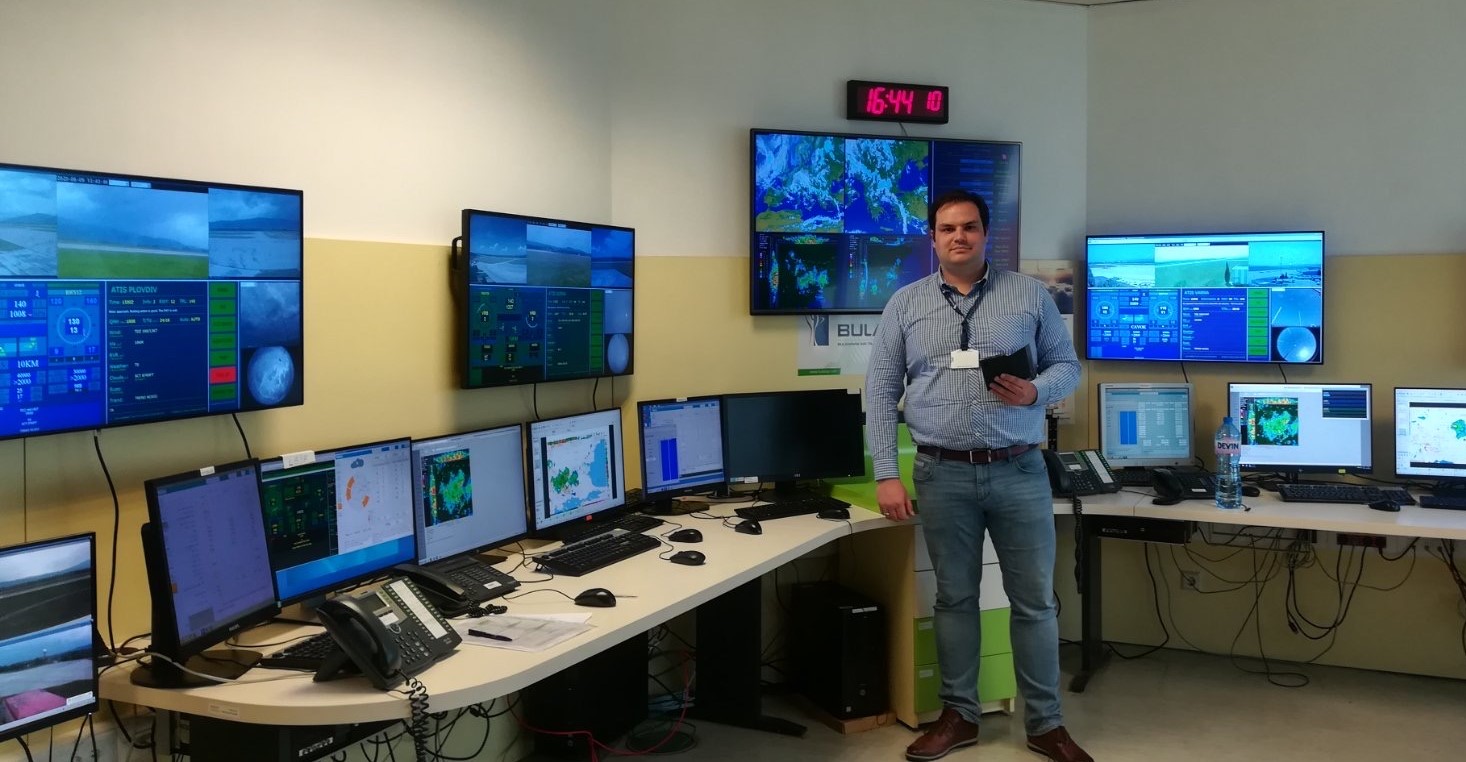

Students from the Department of Meteorology and Geophysics at Sofia University visited virtually the Weather Forecasting Center of BULATSA.
The aviation meteorologists of BULATSA made a presentation about the importance of the profession and its specifics, which play a key role in the provision of safe flight services.
The students had the opportunity to see the workplaces and get acquainted with the organization and responsibilities of aviation meteorologists. They participated in the preparation of a forecast for the current convective clouds, affecting all flights in the airspace served by BULATSA.
During the virtual visit, the students got acquainted with the sensors located at the airports for measuring meteorological elements and with a demonstration of how to prepare a code message for the current state of meteorological weather METAR.
Questions about the qualification of the aviation meteorologist and the opportunities to apply for a job at the BULATSA forecasting center were also discussed.
The professional air navigation service organizations with a sharp call to the European Parliament

Five professional organizations working in the field of air navigation services – the Air Traffic Controllers European Unions Coordination (ATCEUC), the European Transport Federation (ETF), the International Federation of Air Traffic Controllers’ Associations (IFATCA), the International Federation of Air Traffic Safety Electronics Associations (IFATSEA) and the International Federation of Aeronautical Information Management Associations (IFAIMA) – call in a joint statement on the members of the Committee on Transport and Tourism (TRAN) of the European Parliament for urgent measures to support the Air Navigation Service Providers (ANSPs) to ensure the sustainability and recovery of the sector after the crisis. The professional organizations express their strong discontent with the proposed by the European Commission changes in the regulatory mechanisms set for the period 2020 – 2024. The organizations express their discontent with the proposals of the European Commission for measures that would jeopardize the activity and quality of services, the preservation of key jobs and maintaining the current working conditions. ANSP’s revenues depend entirely on the payments of the airlines and do not depend on the state budgets and aid. ANSPs are facing huge financial difficulties since the beginning of the crisis. They are caused by the lack of revenue from the airlines, which postponed the payment of service fees for subsequent years, and the lack of traffic. The statement emphasizes that in the short term, ANSPs are fighting the risk of financial insolvency and that the long-term strategic investments in technology and human resources, which are key to ensuring a digitally sustainable European sky, are jeopardized. Link to the document: http://www.atceuc.org/documents/pdf/joint-psos/–letter-to-members-of-tran-committee.197.html